
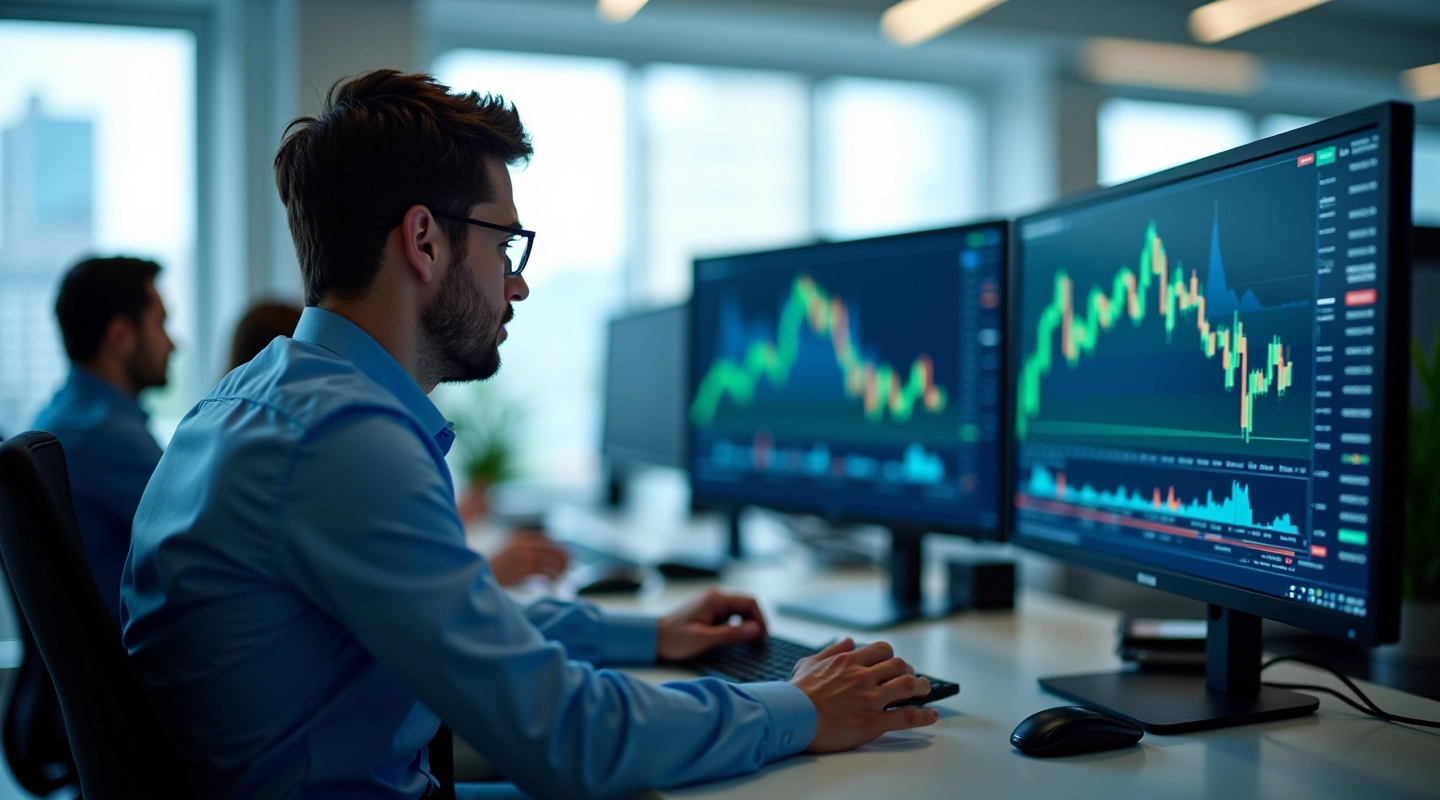
How Market Sentiment Shapes Price Movement
Explore the relationship between investor mood, news narratives, and actual price changes in real time.
Read Article
Not all headlines move markets. We break down which news creates real trading signals and which ones you should ignore.

Written by
Editorial Team
Focused on practical, research-backed guidance for sentiment-driven trading decisions.
You'll see hundreds of headlines every day. Fed announcement, earnings surprise, geopolitical tension, unemployment figures — they're all noise unless you know which ones actually move prices. Here's the thing: it's not about reading more news. It's about understanding which signals matter and why they matter.
The traders who win aren't the ones scrolling Twitter at 5 AM. They're the ones who've trained themselves to spot patterns. They know the difference between a headline that sounds important and a headline that'll actually change the market. That distinction is everything.

Market-moving news doesn't all work the same way. We've found it helps to group them into three distinct categories. Each one has different timing, different intensity, and different effects on trading behavior.
These are the predictable ones — employment reports, inflation numbers, interest rate decisions. Traders know exactly when they're coming. The market's reaction is sharp but usually short-lived. Why? Because everyone's positioned for the announcement. The real signal comes from how the number compares to expectations, not the headline itself.
Earnings misses, sudden CEO departures, regulatory action — these create actual chaos because nobody's ready for them. The market overreacts first, then corrects. This is where volatility creates real opportunities. You're not looking for the news itself. You're looking for the gap between what happened and what the market expected.
Sometimes the news isn't big on its own, but it confirms a mood that's been building. A positive analyst note when traders are already pessimistic. A small layoff announcement during a hiring freeze. These shift the emotional tone of the market without being the biggest headline of the day.
Explore the relationship between investor mood, news narratives, and actual price changes in real time.
Read Article
Step-by-step guide to using AI tools and platforms that analyze market sentiment from news sources.
Read Article
Converting what you learn from sentiment analysis into actual trading decisions and action plans.
Read Article
Here's what most people get wrong about news: they think the news itself is the signal. It's not. The signal is the market's reaction. And that reaction depends heavily on timing.
If you hear about a development at the same time everyone else does, you're already late. The real edge comes from understanding which news will reach the market first, how different traders will interpret it, and when the actual impact will hit. A positive earnings report released after market close? It won't move prices until the next morning. A geopolitical crisis at 2 AM? International traders are already moving before US markets even open.
This is why sentiment analysis tools are so useful. They don't just identify news — they track how fast it spreads, which market participants are reacting, and when the sentiment shift is actually complete. That timing window is where the opportunity lives.
This article is educational only and is not financial or investment advice. Trading outcomes are not guaranteed and may vary based on market conditions, individual decisions, and risk management practices. Always consult with qualified financial professionals before making trading decisions.
So how do you actually use this? Start by asking three questions about any news you encounter:
Scheduled news has limited impact unless the number deviates significantly from forecasts. Surprises create volatility. That's your first filter.
If major news sources are covering it simultaneously, the market's already reacting. Slow-spreading news sometimes has delayed effects as more traders discover it.
News that aligns with existing market mood creates steady trends. News that contradicts sentiment creates reversals. Reversals are where the real moves happen.

Every trader has access to the same news. What separates the ones who profit from the ones who lose is simple: they've learned to filter. They know which headlines matter and which ones are just noise. They understand timing. They recognize when sentiment is shifting before the crowd catches on.
That's not luck. That's skill you can develop. Start by tracking a few stocks or markets. Watch what happens after different types of news. Notice the patterns. See which announcements move prices and which ones fade quickly. Over time, you'll build intuition about what matters.
The news isn't going to stop coming. But you don't need to react to all of it. You just need to catch the signals that actually matter. Once you can do that consistently, you've got an edge.